
Setting up a fund
You’re weighing up an SMSF and want an honest view on whether it suits your balance and plans, before you set up a trust deed and a corporate trustee.
An SMSF accountant who handles the accounts, the tax return, the audit and the rule changes, so you can make good decisions as a trustee without chasing deadlines.
You’re weighing up an SMSF and want an honest view on whether it suits your balance and plans, before you set up a trust deed and a corporate trustee.
You’re retiring or close to it, and want the switch from accumulation to pension done properly, with the right paperwork and the minimum drawdowns sorted.
Your fund has got bigger or more complicated, and you’d like an accountant who answers questions before lodgement, not just after it.
You hold, or want to buy, property through your SMSF, including business premises or a property bought with a limited recourse loan.
We start with whether an SMSF is the right vehicle for you. If it is, we arrange the trust deed and a corporate trustee, register the fund with the ATO, open the bank account and roll your existing super across. We also help you write an investment strategy that actually reflects what you plan to do.
We’ll tell you honestly if an SMSF isn’t right for you. That conversation is free.Each year we prepare the fund’s financial statements, member statements and the SMSF annual return, and lodge them on time. We check contributions against the caps, record pension payments and make sure the fund’s tax position is right before anything is signed.
For trustees who want the fund handled properly and the deadlines met without chasing.Every SMSF must be audited each year by an approved SMSF auditor before the annual return is lodged. We organise the audit with an independent auditor, supply everything they need and deal with their questions, so the audit doesn’t become your job.
Independence matters: the auditor must be separate from whoever prepares the accounts.We help you plan contributions within the caps, use carry-forward and bring-forward rules where they fit, and start, review or restructure pensions. Timing matters here, so we talk about it before 30 June, not after.
For members building their balance or starting to draw on it.Property inside an SMSF comes with strict rules: the sole purpose test, related-party restrictions and, if the fund borrows, a limited recourse borrowing arrangement. We help you set it up correctly and keep the records the auditor will want to see.
For trustees holding business premises or investment property in the fund.When the fund has done its job, we handle the final accounts, the last audit and return, the rollover or payout of member balances, and closing the fund with the ATO.
For trustees simplifying their affairs, or families dealing with an estate.Division 296 is now law and applies from the 2026–27 year. Earnings on the part of a member’s total super balance above $3 million attract extra tax, taking the rate to 30%, and to 40% above $10 million. Only realised earnings count. There’s also a one-off choice about how assets held at 30 June 2026 are valued, which SMSF trustees need to make in time.
The concessional cap is now $32,500 a year and the non-concessional cap is $130,000. If your total super balance was under $1.84 million on 30 June 2026, you can bring forward up to $390,000 of non-concessional contributions.
The general transfer balance cap is now $2.1 million. That’s the limit on how much you can move into a tax-free retirement pension, so it’s worth checking before you start or top up a pension.
Employers now pay super at the same time as wages, and contributions must reach your fund within seven days. Members who are employees will see contributions arrive more often, and the old small business clearing house has closed.
Not sure how any of this affects your fund? That’s exactly what the free 20-minute call is for.
We’ve looked after self-managed super funds in Byron Bay for decades, through every round of rule changes. Many of the trustees we work with set their funds up with us and have stayed with the same people ever since.
That continuity matters. We know why your fund holds what it holds, what you’re planning for, and which decisions are coming up, so advice arrives before the deadline rather than after it.
We’re Chartered Accountants and a registered tax agent, and your fund’s accounts are prepared and reviewed in our Jonson Street office, not sent offshore.
When your plans need financial advice as well as accounting, we work alongside licensed financial advisers, so your investment and tax decisions are made together.
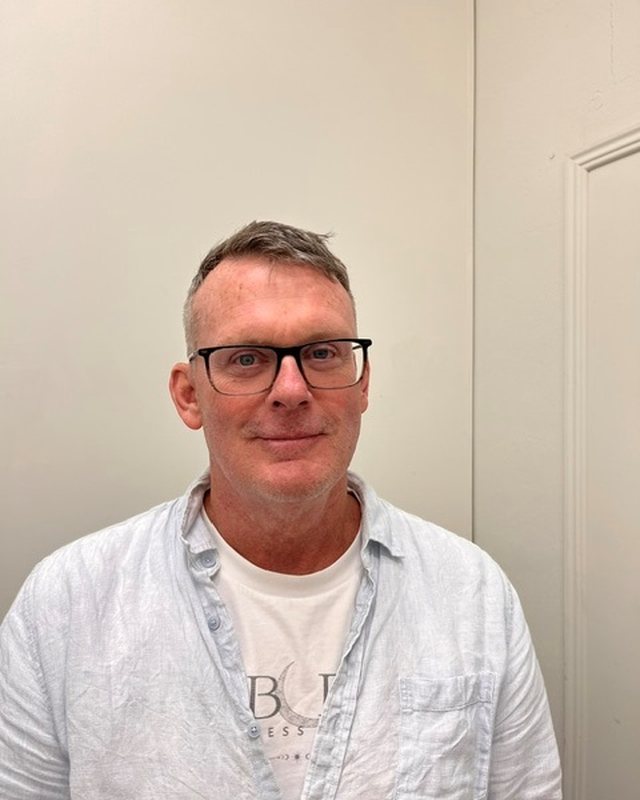
Colin has more than 30 years in public practice, working with sole traders, partnerships, companies, family and unit trusts and self-managed super funds. He holds a Bachelor of Economics, an Advanced Diploma of Accounting and a Master of Accounting, and is completing the Chartered Accountants program.
Colin and the team look after your fund from set-up to audit, and you’ll deal with the same people year after year.
Book a call with ColinTell us about your fund, or the fund you’re thinking of setting up. Phone or Zoom.
We look at the deed, the investment strategy and the last set of accounts.
What needs fixing first, what it costs each year, and the key dates.
Accounts, audit and return done on time, with a call before 30 June.
Because he knows our businesses so well, we are comfortable following his advice.Dennise Simmons, Simmos Automotive Group. A TNR client for more than twenty years.
Not by law, but almost every fund uses one. As trustee you’re responsible for the fund’s financial statements, its annual return and an independent audit each year, and the penalties for getting it wrong fall on you personally. An SMSF accountant takes care of that work and keeps you inside the rules.
An approved SMSF auditor checks the fund’s accounts and its compliance with super law every year, before the annual return is lodged. The auditor has to be independent of whoever prepares the accounts, so we arrange the audit with an independent auditor and handle their questions for you.
Division 296 applies from 1 July 2026 to members whose total super balance is above $3 million, across all their funds. Extra tax applies to the share of realised earnings above that level. If your balance is anywhere near $3 million, talk to us early: there are decisions about asset values at 30 June 2026 that need to be made on time.
The concessional (before-tax) cap is $32,500 and the non-concessional (after-tax) cap is $130,000. If your total super balance was under $1.84 million on 30 June 2026, you may be able to bring forward up to $390,000. Unused concessional cap from earlier years can sometimes be carried forward too.
Yes, as long as it meets the sole purpose test of providing retirement benefits. The fund can’t buy residential property from you or a relative, and you can’t live in it or rent it to family. Business premises can be bought from members and leased to your business at market rent. If the fund borrows, it needs a limited recourse borrowing arrangement.
Yes. With your permission we request the fund’s records from your current accountant and take it from there. It’s usually simplest after the last annual return has been lodged, but it can be done at any point in the year. How changing accountants works.
It depends on your balance, how involved you want to be and what you want the fund to hold. An SMSF has fixed running costs, so it usually suits larger balances or people who want control over investments like property. We’ll give you a straight answer, even if it’s that you’re better off where you are.
A complimentary, confidential call about your SMSF, by phone or Zoom. No forms and no obligation.
Or call the office on (02) 6685 6529